- ZeroBlockers
- Archive
- Page -8
Archive


The Pyramid Is Collapsing: How AI Is Reshaping Workforce Structure
For decades, organizations were pyramids. A broad base of junior employees supported narrower layers above. Entry-level hires did the grunt work, writing tickets, processing data, creating basic designs, conducting routine research, while slowly building the judgment that would carry them upward. That structure is collapsing.


AI Makes Work Easier, and Growth Harder
Today, a designer can generate fifteen variations in fifteen minutes. The output is faster, and the quality is often higher. But something essential is missing: the learning that used to come from the struggle. This is the central paradox of the AI era.

AI has Collapsed the Career Ladder. The Four Questions That Define Your Career Stage
Your career stage isn't defined by what's printed on your business card. It's defined by the question you're primarily trying to answer in your work. There are four questions you should answer to know where you are, each representing a distinct level of thinking.


The 4 Types of Team Dependencies That Kill Performance (and How to Spot Them)
Dependencies remove autonomy, which kills accountability. Once you have handoffs you allow people the wiggle room to throw up their hands and say "I did my job". We need to remove dependencies if we want teams to be accountable for outcomes - and that start with identifying the different types of dependencies that can exist.
Why We Need a Brook's Law for Teams
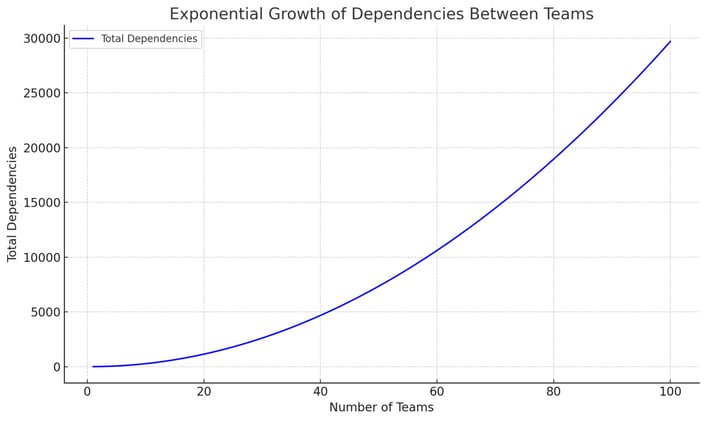
In 1975, Fred Brooks published "The Mythical Man-Month," introducing what became known as Brooks' Law: "Adding manpower to a late software project makes it later." Brooks observed that communication overhead grows much faster than productive capacity when you add people to complex projects.The same is true for adding more projects into a portfolio.

Common Objections to Empowering Teams (and How to Rebut Them)
Our current way of working, isn't working. Up to 90% of features fail to deliver the expected business value. Empowered teams improve outcomes because they are closer to customers and can iterate faster towards solutions that work for both customers and the business. They only problem is that it is a complete reversal of how many companies work today so there is quite a bit of pushback.

How to Run an Effective Quarterly Planning Session for Empowered Teams
Quarterly planning aligns Product Teams with Stream Teams through collaboration, not control. The Product Team shares their vision and strategy, while Stream Teams determine how to achieve it. This approach preserves team autonomy while ensuring everyone works toward common goals. Done well, quarterly planning enables product teams to focus on impact, navigate dependencies efficiently, and continuously learn. Done poorly, it can result in misalignment, overcommitting, or a lack of accountability.

Repaying the Trust in Empowered Teams
When a team is empowered to decide what to build and when, it requires a huge amount of trust form management. A Product Team stays responsible for the outcomes of the Product regardless of whether they have empowered Stream Teams or not. This delegation of authority represents a significant investment of trust that Stream Teams must actively work to maintain and strengthen.

Communication between Teams is a Bug, Not a Feature
"This wasn't what we expected." The Marketing team stares at the new product dashboard, three weeks past its intended launch date. The Frontend team built exactly what was specified, but the data from the Backend team's API doesn't match their needs. The proposed solution? More meetings. Daily cross-team syncs, weekly alignment sessions, and a new Slack channel for real-time coordination.
The Weekly Product Review: Bridging Team Autonomy and Product Success
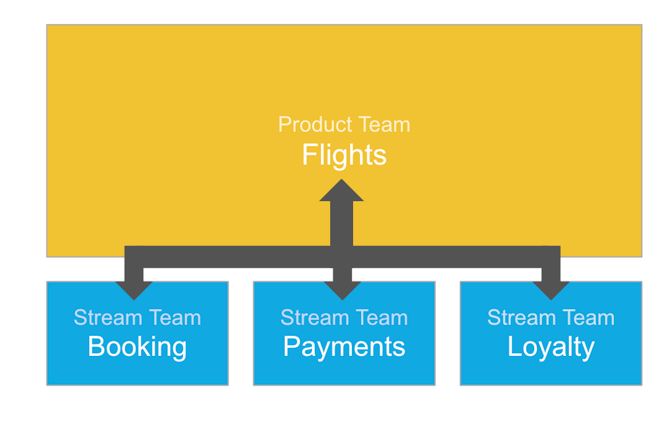
Empowering teams requires trust. Stream Teams are given the autonomy to achieve the product objectives they’ve been set, and they are accountable for outcomes rather than just outputs. However, autonomy does not mean operating in isolation - effective product development requires ongoing monitoring to ensure teams are driving meaningful impact. This is where the Weekly Product Review (WPR) comes in.